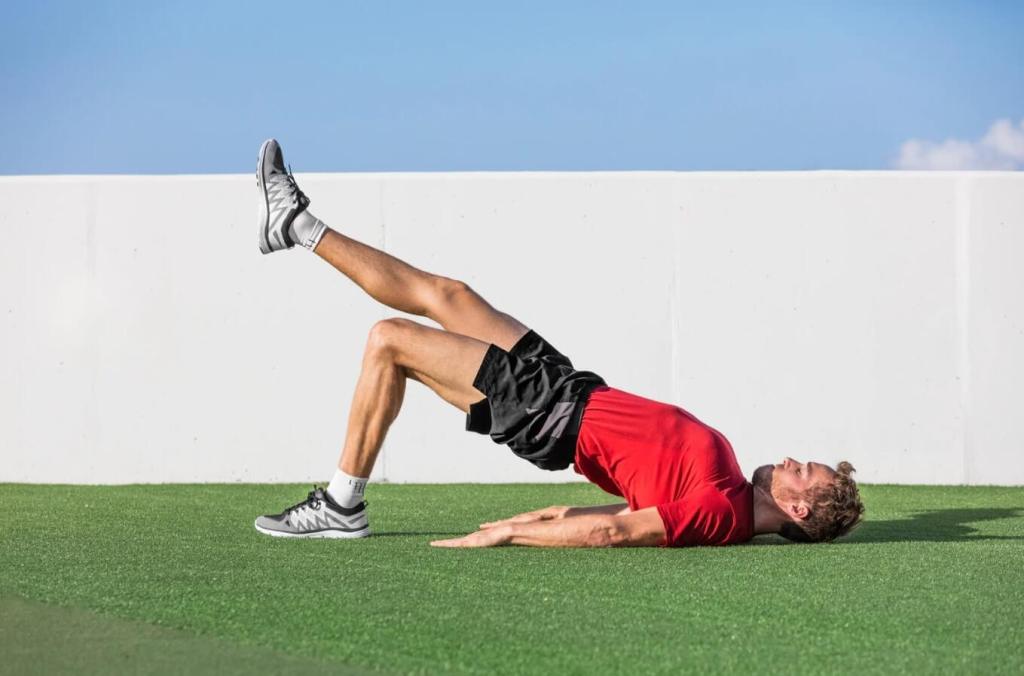
If you’re looking to build a stronger core, improve your posture, and activate your glutes effectively, the glute bridge exercise is one of the best bodyweight workouts you can do. Simple yet highly effective, this exercise targets your glutes, hamstrings, and lower back, making it a staple in both beginner and advanced fitness routines.
Whether your goal is to tone your glutes, improve your athletic performance, or alleviate lower back pain, understanding the glute bridge exercise and how to perform it correctly can make a significant difference in your fitness journey.
What Is the Glute Bridge Exercise?
The glute bridge exercise involves lying on your back, bending your knees, and lifting your hips toward the ceiling while engaging your glute muscles. It’s a low-impact movement that can be done without any equipment, making it ideal for home workouts and gym settings alike.
This exercise is particularly beneficial for people who spend long hours sitting, as it helps counteract the effects of prolonged hip flexion and inactivity by activating the posterior chain.
Key Benefits of the Glute Bridge Exercise
1. Glute Activation and Strengthening
The primary focus of the glute bridge is to strengthen the gluteus maximus — the largest muscle in the body. Strong glutes are essential for movements like squats, lunges, and deadlifts, as well as everyday actions like walking, climbing stairs, and lifting.
2. Improved Posture and Core Stability
By engaging the glutes and core, the glute bridge helps stabilize the pelvis and spine. This can contribute to better posture and reduce the risk of lower back pain and injury.
3. Enhanced Athletic Performance
Stronger glutes can improve performance in running, jumping, and sports that require explosive power. Athletes often use glute bridges as part of their warm-up or strength training routine.
4. Reduced Lower Back and Knee Pain
Activating the right muscles can help alleviate compensatory strain on the lower back and knees, making the glute bridge exercise beneficial for rehabilitation and injury prevention.
5. Versatility
The glute bridge can be modified or progressed in various ways — from adding resistance bands to performing single-leg bridges — to increase intensity and effectiveness.
How to Perform the Glute Bridge Exercise Correctly?
Follow these steps for proper form:
- Start Position: Lie on your back with your knees bent, feet flat on the floor, and arms by your sides. Keep your feet hip-width apart and heels close to your glutes.
- Engage Core and Glutes: Tighten your core muscles and squeeze your glutes.
- Lift Hips: Push through your heels to lift your hips toward the ceiling. Your body should form a straight line from your shoulders to your knees.
- Hold the Position: Pause at the top for 1–2 seconds, continuing to squeeze your glutes.
- Lower Down: Slowly lower your hips back to the floor with control. Repeat for 10–15 reps.
Tips for Maximum Effectiveness
- Avoid overarching your lower back.
- Do not push with your arms or shoulders.
- Ensure the movement is coming from your hips, not your back.
- Keep your chin slightly tucked to maintain neck alignment.
Popular Variations of the Glute Bridge Exercise
To add challenge and variety to your workouts, try these variations:
1. Single-Leg Glute Bridge
Lift one leg off the ground and perform the bridge using only one leg. This variation increases the load and improves balance and coordination.
2. Elevated Glute Bridge
Place your feet on a bench or stability ball to increase the range of motion and intensity.
3. Banded Glute Bridge
Add a resistance band around your thighs to activate your glute medius and improve lateral hip stability.
4. Weighted Glute Bridge
Rest a dumbbell or barbell across your hips to add resistance and build more strength.
5. Hip Thrust
Often confused with the glute bridge, the hip thrust is a more advanced movement done with your upper back elevated on a bench for increased range and resistance.
Incorporating Glute Bridges into Your Routine
The glute bridge exercise is versatile enough to be used in warm-ups, strength training sessions, or as part of rehabilitation programs. For best results:
- Start with 2–3 sets of 10–15 reps.
- Increase resistance or difficulty as your strength improves.
- Pair with complementary exercises like squats, lunges, and deadlifts for a balanced lower-body workout.
Final Thoughts
The glute bridge exercise may look simple, but its impact on your fitness is powerful. Whether you’re aiming to tone your glutes, recover from an injury, or simply maintain a healthy, active lifestyle, glute bridges deserve a place in your regular workout routine.
With minimal equipment and maximum benefit, there’s no reason not to include this effective movement in your fitness plan. Ready to strengthen your glutes and improve your posture? Start incorporating glute bridges today!

 Sydney Physio