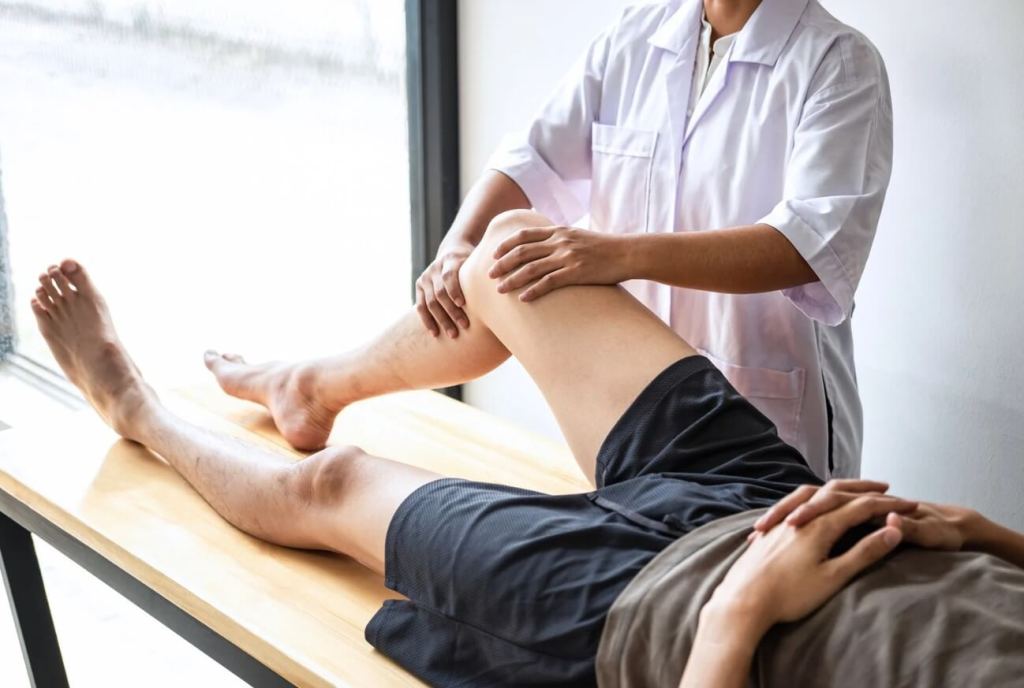
Medial Collateral Ligament (MCL) injuries are a common knee injury that often results from direct blows to the outer knee or from twisting motions during sports and activities. Rehabilitation for an MCL injury involves strengthening, stretching, and stability exercises designed to restore range of motion, build muscle, and improve knee stability. Below, we outline key MCL rehab exercises that can aid recovery, helping to prevent further injury and hasten a safe return to activity.
1. Quadriceps Sets
- Purpose: Strengthens the quadriceps muscles, which support the knee joint.
- How to Do It: Sit with legs straight and relaxed. Tighten the thigh muscles and push the back of your knee into the ground. Hold for 5 seconds, then release. Repeat 10–15 times.
2. Heel Slides
- Purpose: Increases knee flexion and range of motion.
- How to Do It: Lie on your back with legs extended. Slowly slide your injured leg’s heel toward your buttocks, bending the knee as much as possible without pain. Hold for 5 seconds, then slide back down. Repeat 10–15 times.
3. Straight Leg Raises
- Purpose: Strengthens the quadriceps without straining the knee joint.
- How to Do It: Lie flat with your uninjured leg bent and the injured leg straight. Tighten the muscles in the straight leg and lift it about 6–8 inches off the ground. Hold for 5 seconds, then slowly lower. Do 10–15 reps, aiming for three sets.
4. Mini Squats
- Purpose: Builds strength in the thighs and improves knee stability.
- How to Do It: Stand with feet hip-width apart, holding onto a sturdy surface. Bend your knees slightly, keeping your back straight and not going below a 30-degree angle. Straighten back up and repeat 10–15 times.
5. Hamstring Curls
- Purpose: Strengthens the hamstrings, which work with the MCL to stabilize the knee.
- How to Do It: Stand or lie on your stomach, bending the injured knee to bring your heel toward your buttocks. Hold for a few seconds, then slowly lower. Repeat 10–15 times for three sets.
6. Calf Raises
- Purpose: Builds strength in the calf muscles, which support knee stability.
- How to Do It: Stand with feet hip-width apart and slowly raise onto your toes, lifting your heels off the ground. Lower back down and repeat for 10–15 reps. This exercise can be made more challenging by holding weights.
7. Clamshells
- Purpose: Strengthens the gluteal muscles, which help with knee alignment.
- How to Do It: Lie on your side with knees bent at a 90-degree angle. Keeping your feet together, lift the top knee as high as comfortable without moving your pelvis. Lower back down and repeat 10–15 times for each leg.
Tips for Safe MCL Rehabilitation
- Consistency: Perform these exercises regularly, as advised by a healthcare professional.
- Progress Gradually: Start with low-intensity exercises and increase resistance as tolerated.
- Use a Support Device: Depending on injury severity, a knee brace can provide added support during early rehab stages.
- Avoid High Impact: Skip exercises that place undue stress on the knee until strength and stability are restored.
Consult a Physical Therapist: To tailor a program that matches your injury and fitness level, consulting a physical therapist is beneficial. They can help monitor your form and progression to ensure a safe and effective recovery.
MCL rehab exercises are essential for regaining knee function, promoting healing, and preventing re-injury. With a focused and gradual approach, you can return to activities stronger and more resilient.

 Sydney Physio